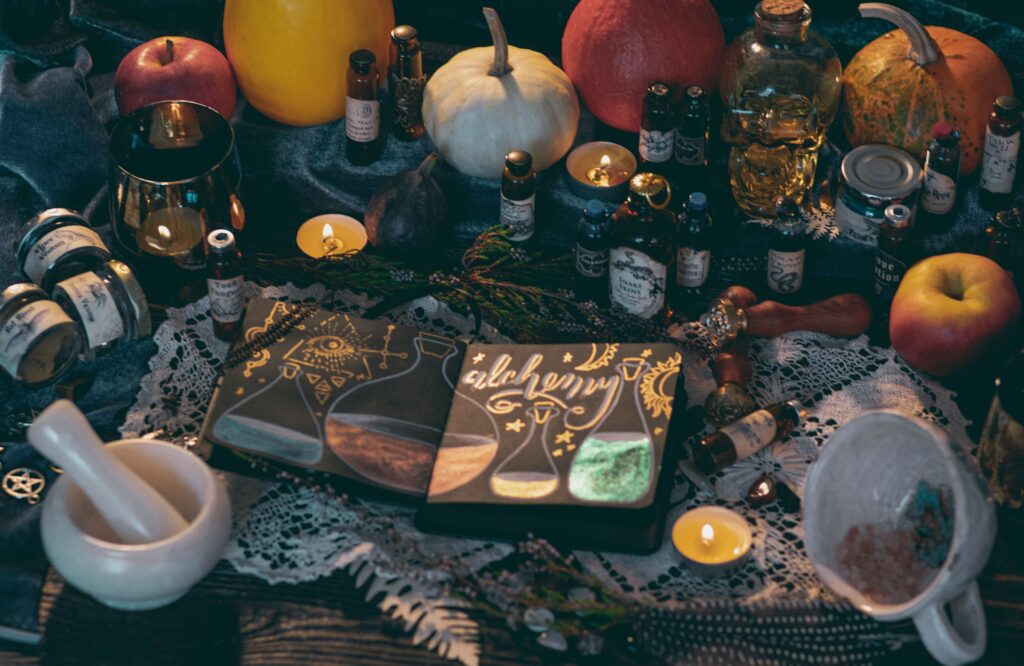
Stress is a constant in our lives, quietly influencing how we work, connect, and grow. How we handle it can shape both our future and how others see us.
I admit I don’t always handle certain kinds of stress well. As someone with strong expectations of myself and a tendency toward self-doubt, I find that reminders of my limitations can make my world feel like it’s falling apart.
Handling stress with grace has been a challenge. Emotional spirals can escalate quickly, but those moments of failure are often where the real learning happens.
Some of the biggest life lessons for me have come from moments where I fell short of my own expectations. The time I gossiped about someone and accidentally sent it to the very person I was talking about? Lesson learned. The time I vented to the wrong person, and it came back around to hurt me? Another lesson.
Sometimes you can’t control the circumstances, but you can control how you respond.
What Stress Has Taught Me
In 1996, a study suggested that 75–90% of healthcare visits may be related to stress-connected health problems. Anxiety, high blood pressure, heart problems, and depression can all be linked to chronic stress.
Unfortunately, avoiding stress entirely isn’t realistic. What we can do is learn how to handle it better over time.
Here are a few things I’ve learned through my own stressful situations:
Don’t let your stress snowball.
When emotions spiral out of control, we’re far more likely to say or do something we regret—which usually creates even more stress afterward.
Think before you speak.
If you need to vent, make sure it’s with someone you can truly trust. I’m not saying you should bottle everything up, but it helps to be mindful of how you express yourself. Words have a way of traveling farther than we expect.
Don’t be afraid to walk away.
Whether it’s from a friendship that isn’t healthy or a job that no longer fulfills you, protecting your sanity and self-worth matters.
Take time for yourself.
Listen to music, spend time with loved ones, diffuse essential oils, or simply breathe. Personally, playing video games helps; there’s something therapeutic about slaying a dragon in Skyrim or tormenting a Sim for a few hours.
Write your feelings down.
Sometimes getting every messy thought out on paper can be incredibly cathartic. You can even throw it away or delete the document afterward—it’s the act of releasing the emotions that matters.
Where Aromatherapy Fits In
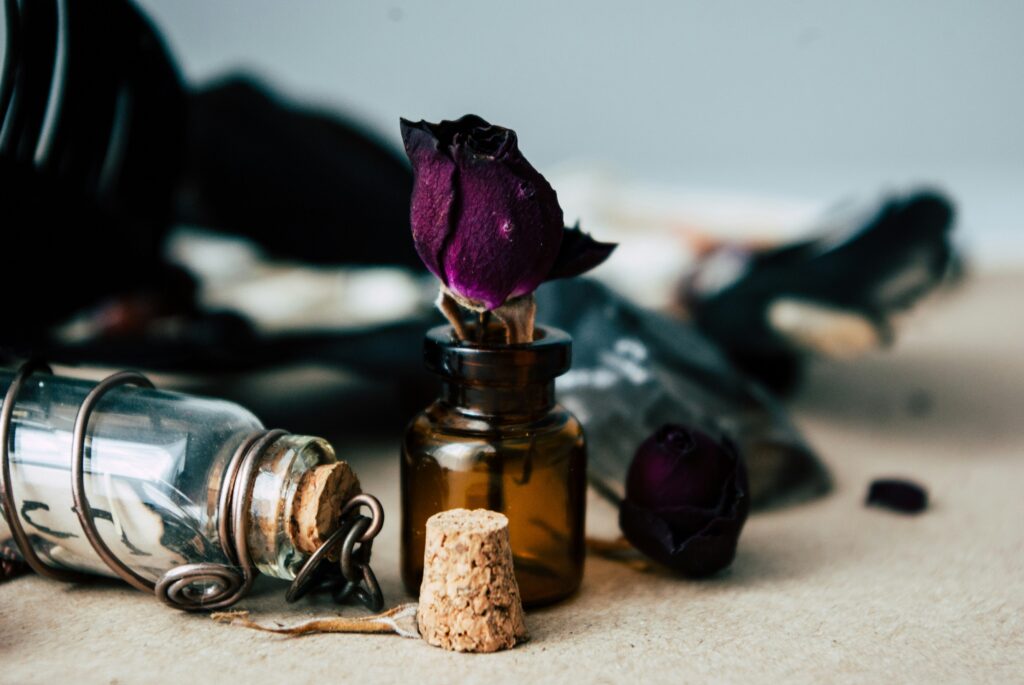
Aromatherapy has been studied for its calming effects on the nervous system. Compounds like limonene, linalool, and linalyl acetate—found in many citrus oils and lavender—are often linked to relaxation, which is why these oils are commonly recommended for stress support.
Some of the oils I personally reach for when I’m feeling overwhelmed include:
- Basil Linalool (Ocimum basilicum)
- Bergamot (Citrus bergamia)
- Grapefruit (Citrus × paradisi)
- Ho Wood (Cinnamomum camphora)
- Lavender (Lavandula angustifolia)
- Lemon (Citrus × limon)
- Neroli (Citrus × aurantium)
- Orange Sweet (Citrus sinensis)
- Roman Chamomile (Chamaemelum nobile)
- Sandalwood (Santalum album)
- Vetiver (Vetiveria zizanioides)
- Yuzu (Citrus junos)
That said, essential oils aren’t a cure-all. They’re just one tool. Managing stress means addressing root causes, building coping skills, and seeking professional help when needed.
Tarot as a Tool for Stress Relief
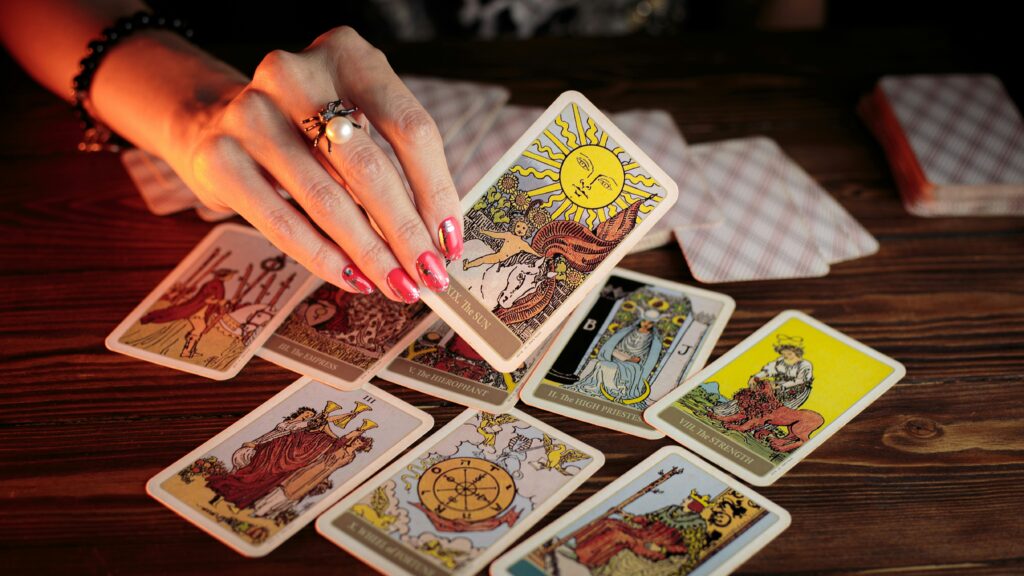
Over the years, I’ve added new practices to my self-care toolkit, and tarot has become especially meaningful to me. When I’m overwhelmed, drawing a card or two gives me a moment to pause and reflect. It’s not about predicting the future, but about checking in with myself: What am I feeling? What do I need right now? Sometimes the symbolism of a card helps me see things from a new angle, or gives me a gentle nudge to rest, set boundaries, or reach out for support.
Using tarot in this way has helped me process stressful emotions, make sense of confusing situations, and remember that I have agency in how I respond—even when things feel chaotic.
A Simple Grounding Ritual
When stress hits, having a grounding ritual can help bring me back to center. Here’s one I return to often:
- Find a quiet, comfortable space. I personally like to sit with my legs crossed beneath me in a meditative pose, but choose whatever feels most grounding to you.
- Take three deep, slow breaths. Inhale through your nose, exhale through your mouth.
- Notice five things you can see, four you can touch, three you can hear, two you can smell, and one you can taste. This “5-4-3-2-1” technique helps bring your awareness into the present moment.
- If you want, hold a favorite crystal, light a candle, or diffuse an essential oil that soothes you.
- If you use tarot, consider drawing a card now and letting its message guide your next steps. I also like to take a few minutes to journal about the card I pull—writing down my impressions, thoughts, and any feelings that come up. This practice helps me process what the card might be showing me and brings even more clarity to the moment.
Stress is inevitable, but the ways we meet it can evolve. Whether you lean on aromatherapy, tarot, grounding rituals, or something else entirely, building your own toolkit of coping strategies makes all the difference.
References
de, D. P., et al. “A Systematic Review of the Anxiolytic-Like Effects of Essential Oils in Animal Models.” Current Neurology and Neuroscience Reports, U.S. National Library of Medicine, 14 Oct. 2015.
https://www.ncbi.nlm.nih.gov/pubmed/26473822